An educational birthday party does not need to feel like a lesson. It can begin with an interesting question, simple materials and time to experiment. The aim is for children to feel comfortable taking part, without a test at the end or promises that one afternoon will improve their school results.
Build, test and try again
The Science Museum Group describes family building activities that explore different solutions without requiring one correct answer. That approach can inspire a simple challenge: make a structure from paper and cardboard, see what stays upright and adjust it.
Prepare materials appropriate to the guests’ ages and a space where adults can support them. Keep tools requiring care with a responsible adult. Do not add chemicals, heat or experiments found on social media merely to make the activity look more impressive.
Instead of rewarding only the tallest structure, ask each team to explain one change that helped. Children who prefer observing, drawing or suggesting ideas can then have a meaningful role too.
Other activities to adapt
- Picture clues: a short treasure hunt using drawings need not depend on who reads fastest.
- Objects and questions: use everyday materials and invite imaginative suggestions about what to do with them.
- A shared story: each participant adds a character or a solution to a fictional problem.
These are ideas to adapt, not a validated programme for improving particular abilities. Age, interests and group size matter more than putting “educational” on the invitation.
Booking a workshop in Madrid
Monkey Donkey lists Ciencia Divertida in its children’s birthday catalogue. That confirms the programme is advertised, but ask for its current content, duration, materials, staff arrangements and suitability for your group before booking. A person dressed as a scientist should not automatically be described as a qualified scientist, and a take-home experiment should not be assumed.
Give the afternoon room to breathe
You could alternate a welcome, a short challenge, a break, another activity and food. Adjust the timing to the children. A quiet place to draw or rest can be as useful as adding another game.
Discuss allergies where food is involved and ask about the photography policy. For venue and booking questions, read our children’s birthday guide to Madrid.
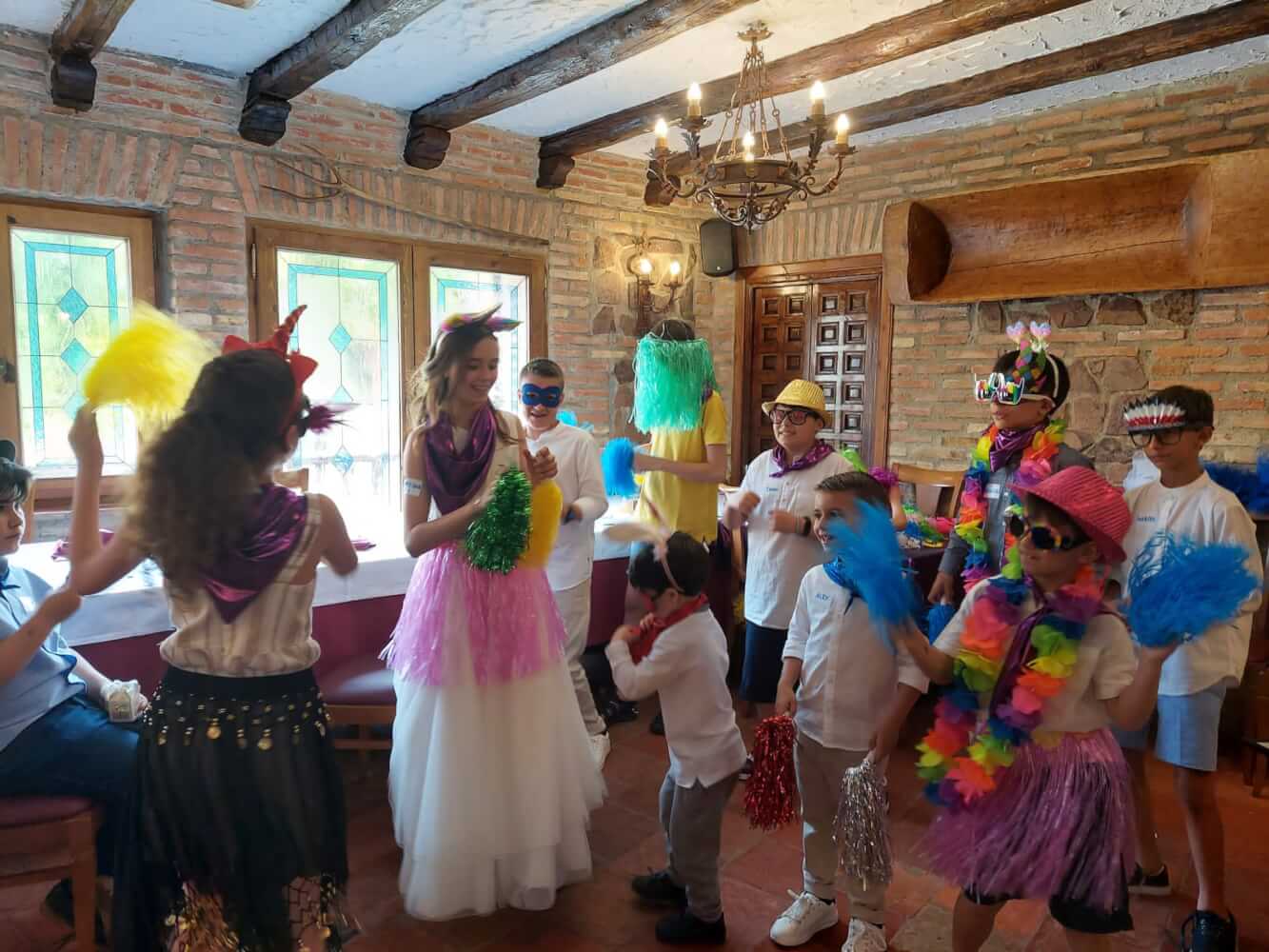
This revision removes unsupported claims about learning faster or better than through books. The archive photograph shows a costume celebration, not a science demonstration.
Sources consulted
Sources checked on 23 September 2026; editorial revision completed on 24 September. Confirm terms and availability for your chosen date.