When comparing pottery classes in Barcelona, make three choices first: handbuilding or wheel throwing, a single workshop or a course, and how you will collect your finished work. The session price alone does not tell the whole story.
Perhaps you want an afternoon away from your phone. Perhaps you have a folder full of mugs you would love to make. Either is a good reason to try clay. The trick is finding a class that fits your expectations and the time you actually have in Barcelona.
Choose the technique before the studio
Handbuilding involves shaping clay with your hands and tools; wheel throwing introduces a rotating wheel. If one technique is the reason you want to go, check that it is explicitly included. A general pottery workshop title is not enough to tell you how much wheel time you will get.
| What you want | Format to consider | Ask before booking |
|---|---|---|
| A first taste of pottery | Beginner workshop | Is it suitable for someone starting from scratch? |
| Time to develop skills | Multi-session course | Can a missed class be made up? |
| A shared activity with friends | Group session | Does everyone make an individual piece? |
Three studios to compare
- Atuell, in Gràcia, lists introductory handbuilding and wheel courses. Check the calendar for the specific format.
- Waku, in Poblenou, describes a two-hour handbuilding workshop with a first firing and Spanish- and English-speaking instructors.
- Clay Capsule offers handbuilding and wheel options. Its monthly handbuilding format includes materials and firings.
These are starting points with public course information. Read the page for your chosen session: two workshops at the same studio may have different inclusions.
Ask about collection before you pay
Pottery is rarely a same-day souvenir. Waku gives an approximate collection window of two to three weeks for its handbuilding workshop. If you are visiting for a weekend, ask whether shipping is available, what it costs and what happens if a piece does not survive firing.
Check the finish too. Glazing might be included, require another session or be completed by the team. If you hope to drink from your mug, ask about its intended use and finished surface. A decorative piece is not automatically ready for everyday table use.
A booking checklist you can save
- Confirm the level, technique and teaching language.
- List the materials, firings and finishing stages included.
- Check minimum ages and supervision when booking for children.
- Read change, cancellation and gift-voucher conditions.
- Keep the collection date and instructions with your booking.
Frequently asked questions
Do I need experience?
Choose a session explicitly described as suitable for beginners. Independent studio access can require previous experience and is a different service.
Is one session worthwhile?
It can help you discover whether you enjoy working with clay. For regular practice, choose a course whose timetable you can realistically maintain.
What should I bring?
Follow the studio’s instructions and wear comfortable clothes you do not mind getting dirty. Ask whether an apron is provided.
Sources and notes
Check current arrangements through the official sources linked below. Information accessed on 21 September 2026. This guide does not imply a personal visit or a ranking of businesses.
Explore the Buscatea business directory and our practical guides for more ideas.
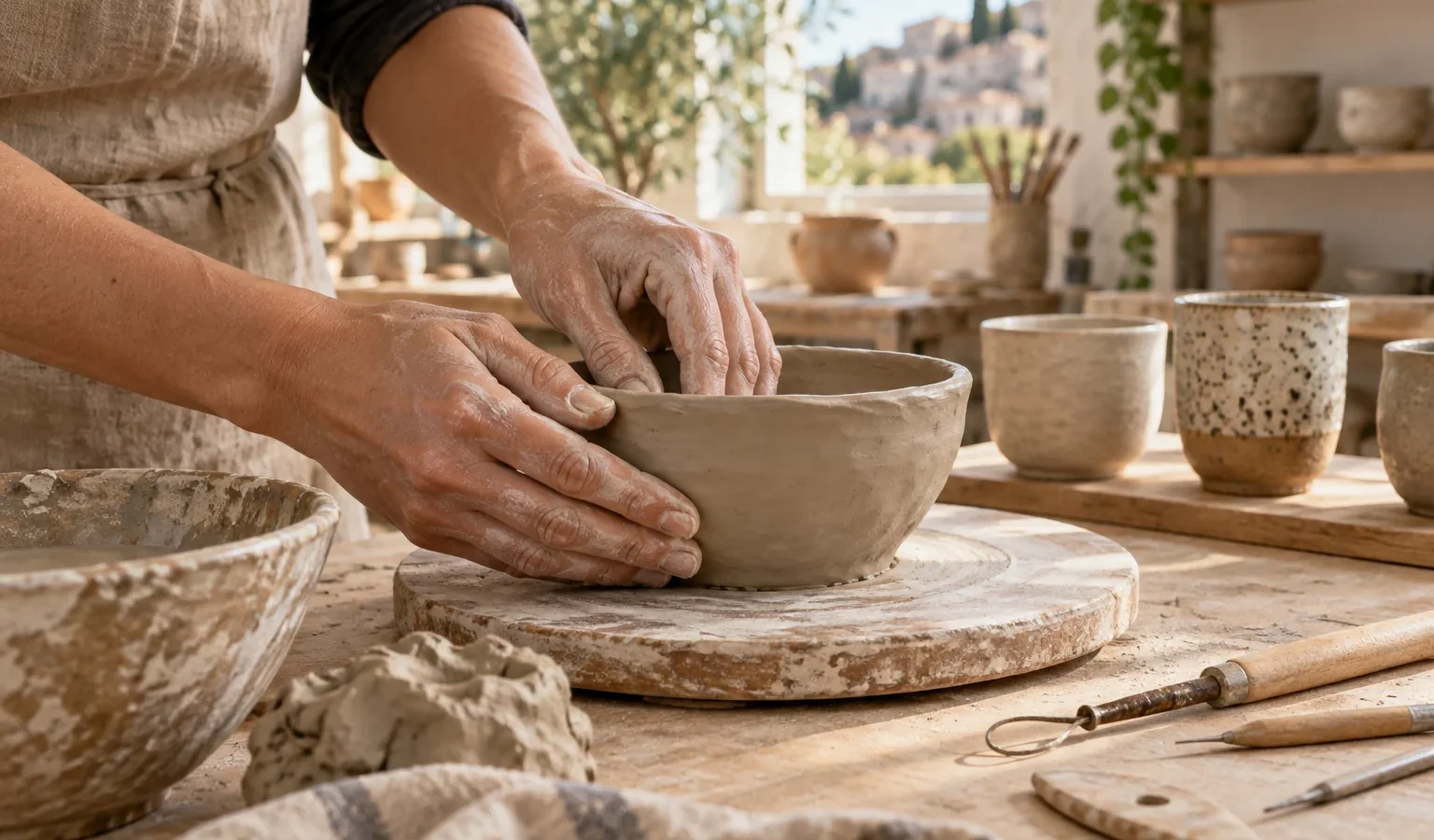
Image: an AI-generated editorial illustration, not a photograph of a particular establishment.
Workshop profiles and contact details
For locations and practical details before booking, see the profiles for Atuell, Waku, Clay Capsule.