If you need to dry laundry indoors in winter, choose a room you can ventilate, leave space around the rack and watch for condensation that keeps returning. Indoor drying is not a problem in every home, but wet clothes add water vapour to the air and can contribute to damp when moisture builds up.
The Social Housing Agency of the Community of Madrid explains that condensation forms when indoor vapour meets cold surfaces such as windows or walls. Its guidance recommends ventilating rooms where wet clothes are left to dry. Here is a simple routine that avoids turning the home into a permanent draught.
Prepare the laundry before hanging it
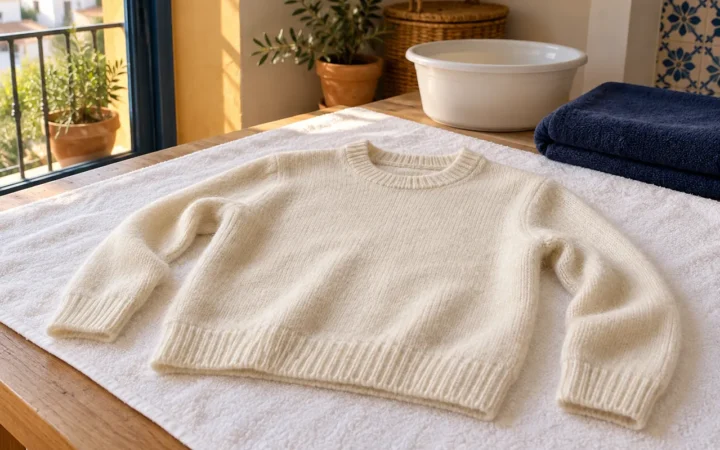
Use the spin setting allowed by the garment and washing-machine instructions. If the care label calls for a delicate cycle, do not choose a harsher setting just to shorten drying time. When the cycle ends, take the clothes out and shake them gently so they are not left bunched together and wet.
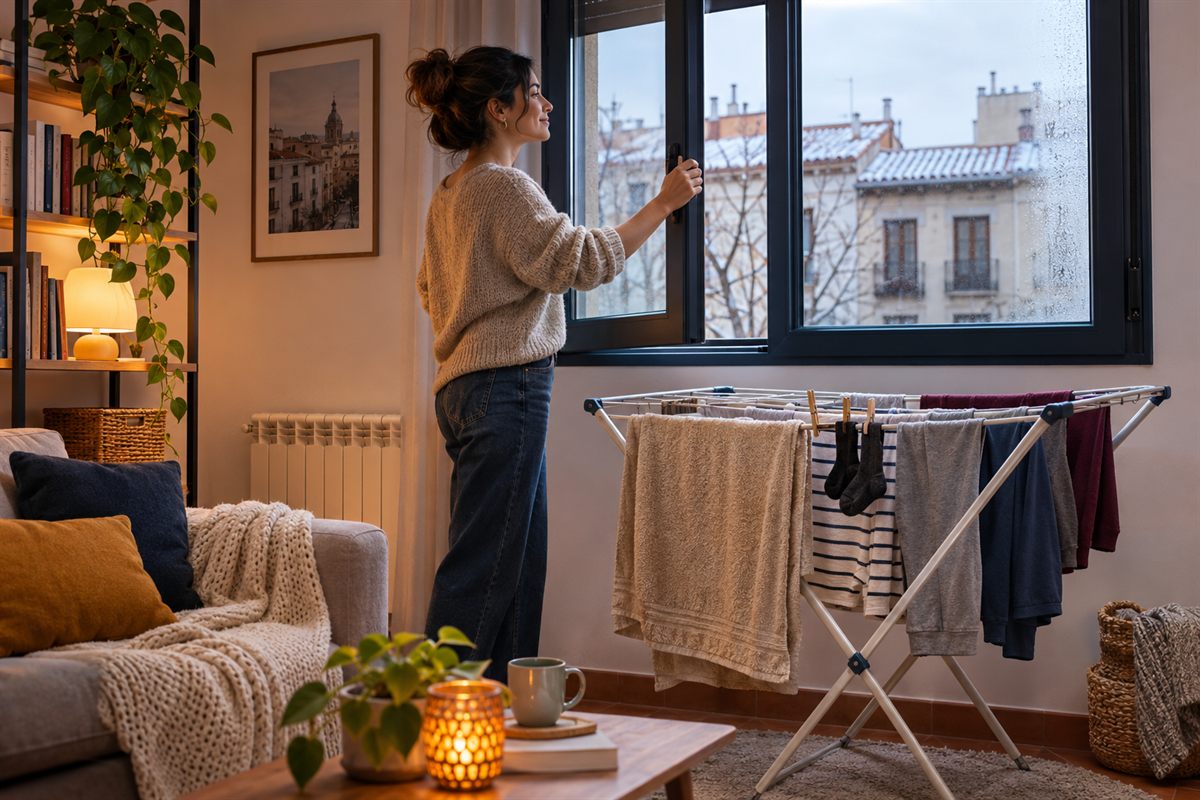
If you have room, place the rack in a space where you can refresh the air without leaving a window open for hours. Spread the items out and leave room for air to move around the rack. Avoid pushing it against a cold external wall or blocking ventilation grilles. Thick, closely packed garments usually need longer than a light load; there is no single drying time that applies to every home.
Ventilate with a purpose
Ventilation helps remove some water vapour. If the room has an extractor or a ventilation system, use it and do not block its inlets or outlets. If you open a window, choose a time that is safe and sensible for the weather and outdoor temperature. The Madrid guidance suggests airing rooms in colder months when the temperature outside is higher; you do not need to leave every window open all day.
After cooking or showering, try to stop steam spreading into colder rooms: close the door while moisture is being produced and ventilate that room when practical. This avoids adding several sources of moisture to the same space at once.
Notice where water appears
A little fog on a window after a shower or laundry load does not, by itself, prove there is a structural problem. Wipe visible water from panes and frames, then see whether it keeps returning to the same place. Leave some space between furniture and cold walls so air can circulate; the Community of Madrid guidance recommends this too.
If you see a persistent mark, peeling paint, an odour that will not clear, or damp that returns despite airing the room, do not assume that moving the drying rack is the whole answer. A leak, water ingress or ventilation or insulation issue may need a building inspection. If you cannot identify the cause, ask a qualified professional or notify the person responsible for managing the property.
An easy laundry-day routine
- Choose a room that can be ventilated and keep its grilles clear.
- Space clothes out on the rack and do not block airflow.
- Ventilate when practical and safe; use an extractor if available.
- Remove visible condensation from windows and check whether it returns.
- If damp persists, look for the cause instead of simply covering or painting the area.
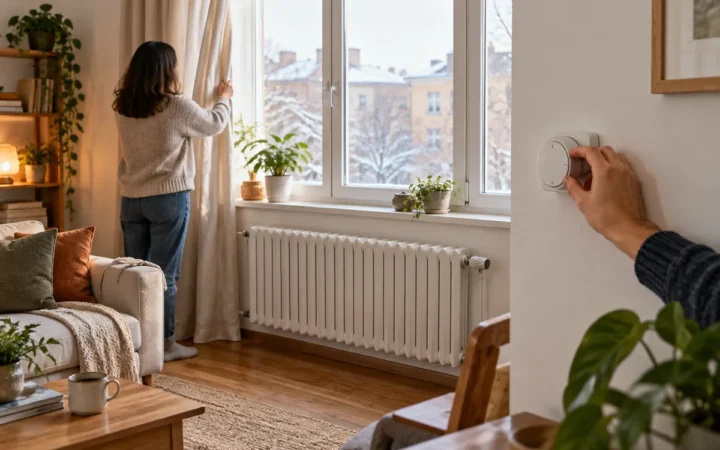
If you are also preparing your home for colder months, see our guide to getting home heating ready before cold weather.
Common questions
Can I dry clothes indoors without a tumble dryer or balcony?
Yes. Choose an area you can ventilate, space the clothes out and keep ventilation grilles clear. Airing should suit the home and outdoor conditions; there is no universal number of hours for every property.
Do I need to leave the window open all day?
Not necessarily. Keeping it open for hours can be uncomfortable and is not a universal recommendation. Use the ventilation built into the home and open a window briefly when it is useful and safe; in colder months, the Madrid guidance suggests doing so when it is warmer outside.
Will a dehumidifier fix any damp problem?
It may help manage some moisture in the air, but it cannot identify or repair a leak, water ingress or building defect. If the problem persists or worsens, find the underlying cause.
Official sources
- Community of Madrid Social Housing Agency: preventing condensation damp
- Spanish Technical Building Code: DB-HS, health and indoor air quality
Sources checked on 3 November 2026. The regional housing guidance describes household practices; it does not diagnose a specific damp problem or replace a building inspection. AI-generated editorial illustration of a fictional home.