Image: AI-generated editorial illustration; a fictional scene with no real venues, businesses or codes.
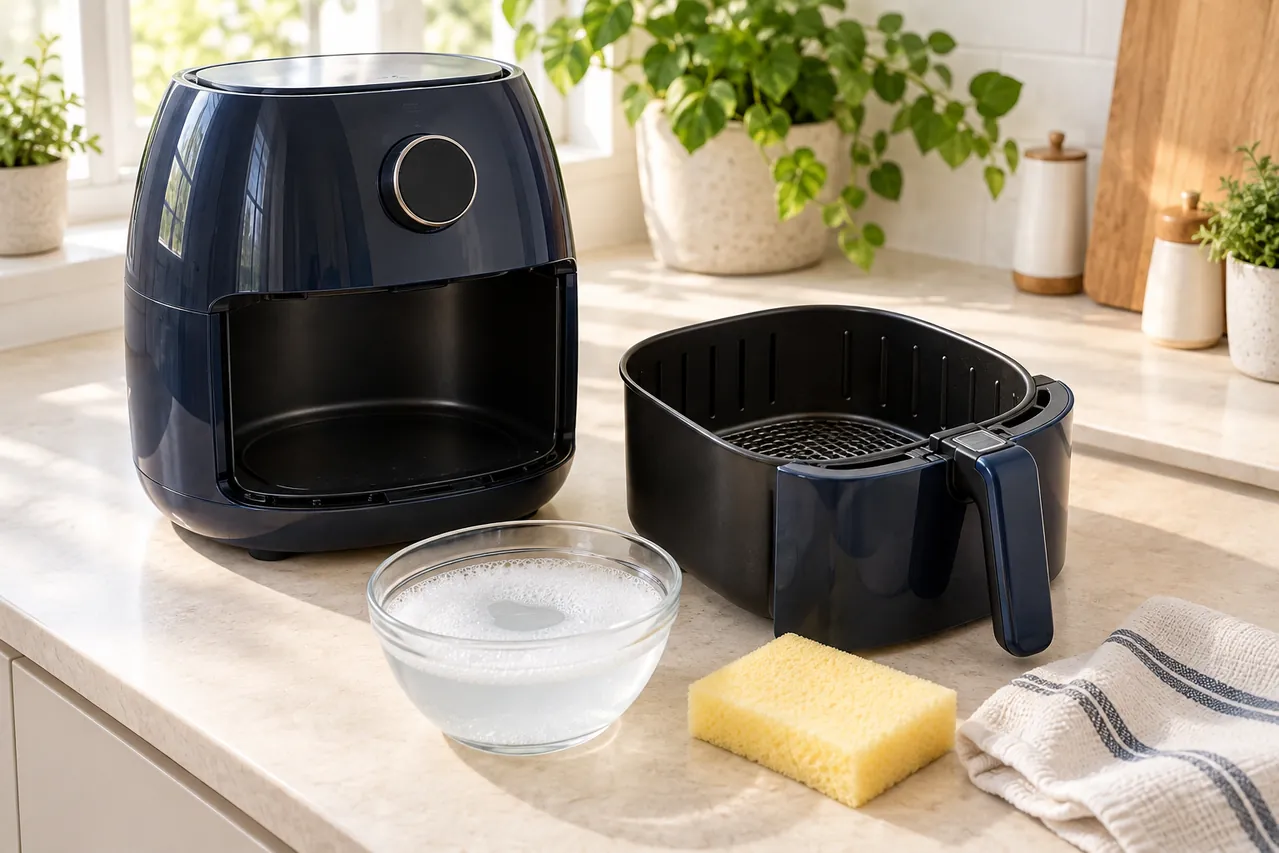
To clean an air fryer with a non-stick basket, switch it off, unplug it and let it cool fully, then wash the removable parts using the method approved for your model. Start with a soft sponge and the cleaning solution its manual permits. Treat the electrical body and heating element separately from the parts you can carry to the sink.
The awkward moment usually comes when one patch refuses to move. Before scrubbing harder, decide whether you are looking at stuck food, greasy residue or a changed surface. A cleaning routine should leave the parts clean and ready to use, rather than turn every stain into a battle with the coating.
Find your model before choosing a method
Use the appliance reference to locate its instructions. A drawer air fryer, a twin-basket machine and an air-fryer oven have different arrangements. Identify the pan that catches grease, the food basket or crisper plate, the fixed cooking space and the outer body with its controls. Removable does not automatically mean dishwasher-safe.
Set out a clean cloth for the parts and leave room for drying. While the basket is out, inspect its corners in good light before putting it away.
| Part | Starting point | Check in the manual |
|---|---|---|
| Pan, basket and crisper plate | Remove loose residue and wash gently | Whether soaking or dishwashing is allowed |
| Fixed interior | Reach it only as directed | Approved tools and moisture level |
| Heating element and upper space | Read the specific cleaning procedure | Access without improvised dismantling |
| Outer body and controls | Use a lightly damp cloth or sponge | Drying and protection of electrical parts |
An ordinary after-cooking routine
The official Philips HD928x manual calls for cleaning after use and removing the oil and fat from the bottom of the pan. Begin with the appliance unplugged and completely cool. Remove accessible scraps from the pieces you will wash. Use gentle movements rather than a knife or another metal tool to prise food from the coating.
Wash approved parts, rinse them and check corners before drying. Only remove a handle, cover or protector if the model’s instructions explain how. A part that comes apart in a video may belong to a different design; do not pull yours until it matches the documented procedure.
Frigidaire’s cleaning guidance also treats the washable basket and pan separately from the appliance body. That is a useful way to arrange the job: wash the approved loose components while the electrical unit stays on the worktop.
Let soaking loosen residue
Philips’ official cleaning help describes hot water, liquid detergent and a soft sponge, with a soak for stuck residue in the pan. Do this with the cooled removable component outside the machine, using the timing in your own instructions. Soaking is different from starting a cooking cycle with soapy water in the drawer.
After soaking, try a small patch gently. If the food is lifting without pressure, continue a little at a time. If it is not, review the approved method instead of reaching for a metal scourer. The aim is to remove the residue, not to polish a coated surface until every change in colour disappears.
For stubborn grease, check the exact cleaner the maker allows. Permission for one model is not permission for every other appliance. The Tefal Easy Fry POP support page recommends washing-up liquid and excludes aggressive cleaners, abrasive pads and special metal-cleaning products. That is why this guide does not prescribe a universal oven-cleaner, vinegar or bicarbonate mixture.
The dishwasher question is about the specific part
Read the cleaning table or component instructions, not just the product description. The Philips manual above permits dishwashing its pan and basket. Another model may distinguish between a plate, a handle or an accessory. Match each piece to its instructions before loading it.
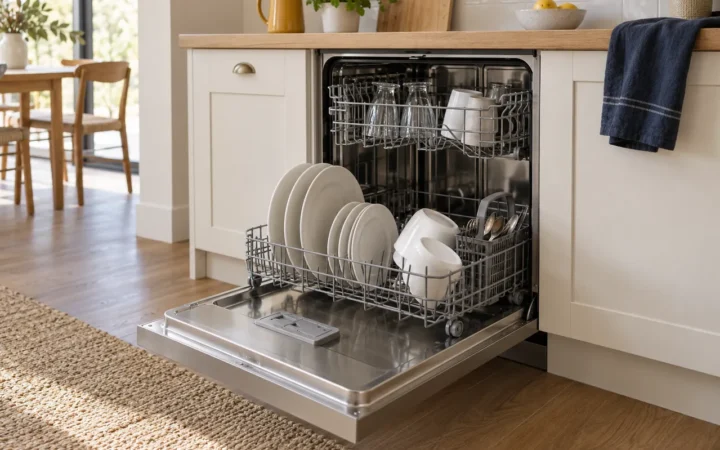
Once a part is approved for the dishwasher, place it so water can reach it and drain away. Our guide to loading a dishwasher explains why a large piece covering another can leave dirty areas. If you choose hand-washing, the coating’s restrictions still apply: manual washing is not permission to use a harsher tool.
Check the interior separately
With the unplugged appliance cold, inspect the cooking space. If you see residue near the top, open the manufacturer’s instructions for the heating element and its access. Some Philips instructions explain reaching that area. Do not transfer a turning or access procedure to another design, and do not remove screws to create your own route.
The Tefal Easy Fry & Steam support page warns against immersing the appliance or putting it under running water. Keep that boundary clear even while the loose parts are being washed. A dripping sponge or spray aimed at the controls is different from cleaning with a damp cloth.
Model features are exceptions, not shortcuts for everyone
Philips documents a dedicated steam-cleaning function for NA55x models and explains where it applies. Use such a feature only when your machine actually has it, following its programme. Do not imitate it by heating detergent in an ordinary air fryer. Likewise, the Philips seasoning advice says the listed models do not need their pan and basket seasoned with oil.
Before reassembly, check that detergent residue is gone, all parts are dry and they fit normally. If you notice peeling, deformation or a surface change you cannot identify, photograph it and ask the maker using the model reference. Avoid trying to repair a coating with scraping or an improvised treatment.
Frequently asked questions
Can I heat water and soap in the air fryer?
This routine does not recommend it. An approved removable-part soak happens outside the appliance. A genuine steam-cleaning programme has separate instructions.
Does it need a deep clean every week?
Follow the after-use cleaning instructions and inspect areas that may hold residue. How you use the machine matters; a fixed schedule is not a substitute for checking its condition.
What if one stain will not come off?
Check the permitted product and method for that material. If you cannot tell a stain from damage, ask support before increasing the abrasive action.
Sources checked on 7 October 2026. Check the official sources for details that depend on your date, order or appliance model.