Image: AI-generated editorial illustration; the home and people are fictional.
Home heating becomes urgent on the first cold day, which is also when it is easy to miss a stuck blind or unresponsive thermostat. A short check before daily use can reveal simple issues and help you decide when to call a professional. Spain’s IDAE recommends matching heating to occupancy and keeping radiators clear.
Start with a short test
Read the thermostat and appliance instructions; check batteries or programming if needed. Test the system briefly after airing the room and closing the windows. See whether the control responds and the radiators warm reasonably evenly. For an error, persistent noise, dampness or a leak, consult the manual or a qualified technician. Do not take a boiler apart or handle pipes and connections.
Check radiators without turning it into a repair
- Leave space: move objects blocking the top or front; obstructed airflow makes it harder to distribute heat.
- Dust when cool and off: do not bend fins, force controls or pour water or products inside.
- Check valves and thermostat: keep them accessible. If a valve is stuck, do not force it.
- Bleed only if your system requires it: IDAE advises bleeding radiators at least yearly at the start of the season. Follow your installation manual and ask for help if unsure what system you have or how to restore pressure safely.
If the top of a water radiator stays cold or you hear bubbling, it may need attention, but air is not the only possible cause. If the issue returns, affects several radiators or you do not know the circuit, get help before handling it.
Set the thermostat around your home and schedule
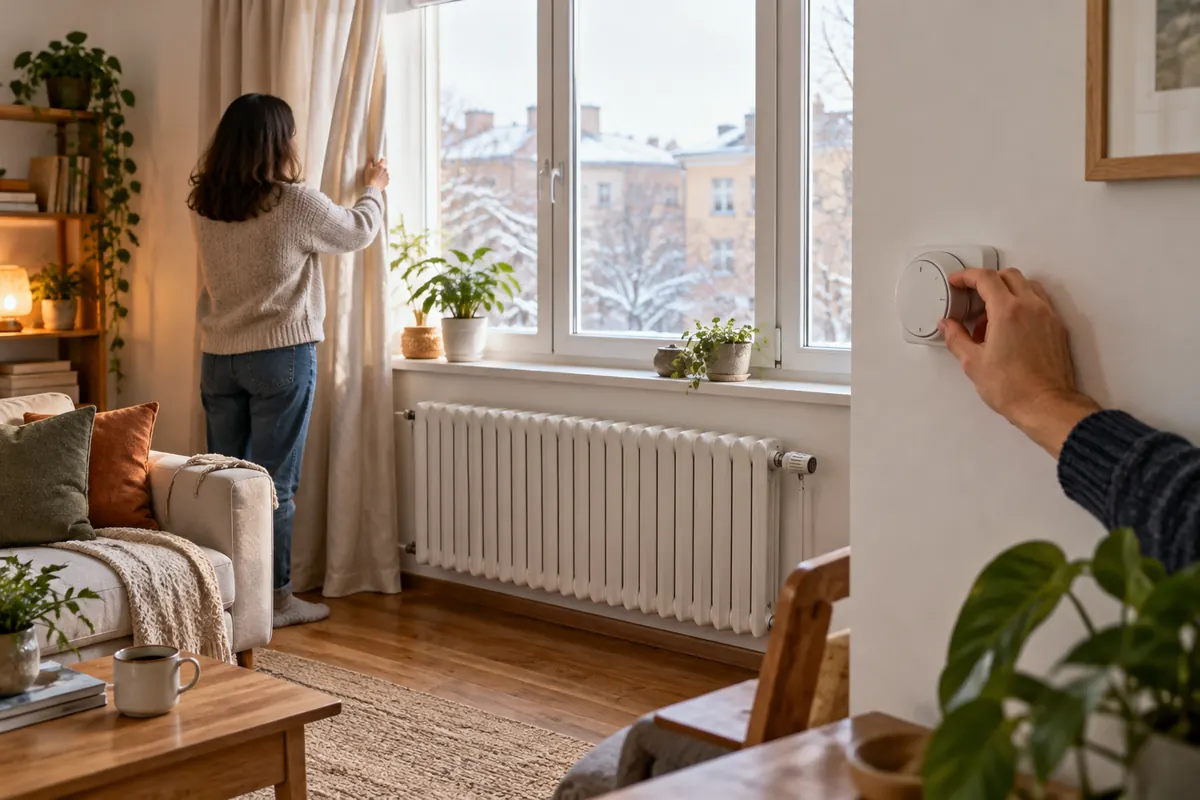
IDAE gives 21 °C, with suitable clothing, as a reference for comfort at home. It is not a one-size-fits-all requirement: adjust for the people who live there and the building. Heating every room beyond what is needed can increase consumption.
Schedule heating around the hours the home is occupied. IDAE advises switching it off at night and airing the home for a few minutes in winter; for an absence of several hours it suggests reducing the thermostat to about 15 °C. Treat this as general guidance: insulation, the system and household needs may call for another setting.
Use windows, daylight and curtains
Open curtains in daylight when sunshine can warm a room, then close them at night to reduce window heat loss. Air the home briefly rather than leaving windows ajar for hours with heating on. If you are replacing window coverings, our guide explains how to measure curtains before buying.
When to call a professional
A boiler, burner and gas or electrical connections are not household cleaning jobs. Do not open casings or adjust pressure, combustion or ventilation. For maintenance, use a qualified technician and check the manufacturer’s instructions and requirements for your installation. Get help if pressure keeps dropping, new noises appear, the system switches off or several rooms stay cold.
Frequently asked questions
Do all radiators need bleeding every autumn?
IDAE recommends it at least yearly when the season starts, but first identify your system and follow its instructions. If you would need to adjust pressure or are unsure how to bleed it, ask a professional.
What temperature should I set?
IDAE gives 21 °C as a reference with suitable clothing. Adjust for the home and occupants; it is neither a guarantee nor a universal setting.
Can heating stay on all day?
That depends on the building, system and occupancy. IDAE recommends matching use to the household schedule and avoiding heating empty rooms; compare comfort and consumption at home.
Official sources checked on 29 October 2026. This is general guidance; follow the instructions for your heating system and appliance.