Choosing Spanish cheeses from a list of winners misses the more interesting question: how do the actual pieces differ, and what would you enjoy eating? These five protected designations offer a useful starting point for comparing milk, production and maturation without turning personal taste into a ranking.
Manchego: the sheep breed matters
Protected Manchego is made with milk from Manchega sheep. Not every sheep’s cheese is Manchego. Minimum maturation varies with format and milk treatment, so two months is not a universal minimum. Look for the protected designation on the label and ask how long the particular cheese has matured.
Cabrales: not always three milks
This Asturian blue cheese is associated with cave maturation. A blend of cow’s, sheep’s and goat’s milk is not compulsory in every piece. Read the actual ingredients and consider buying a small wedge if this is your first exploration of the style.
Idiazabal: smoked or unsmoked
Idiazabal uses raw milk from Latxa and/or Carranzana sheep and matures for at least two months. Its regulatory council recognises both smoked and unsmoked versions. Comparing pieces of similar maturity helps you distinguish the effect of smoking from the effect of age.
Tetilla: a cow’s milk cheese
Queixo Tetilla uses cow’s milk from the breeds permitted by its designation, including Rubia Gallega, Friesian and Brown Alpine cattle and their crosses. Check the protected name on the label; a similar shape is not a substitute for that identification.
Mahón-Menorca: young does not mean fresh
The council distinguishes tierno, semicurado and curado, with minimum maturations of 21, 60 and 150 days respectively. Describing the young version as fresh cheese is therefore imprecise. The artisan version uses raw milk from the farm; check the label if this distinction matters to your purchase.
Build a small, varied board
Choose three noticeably different pieces instead of collecting five similar wedges. Keep the labels so you can remember the producer, milk and maturation. Offer portions that can be tasted separately, with bread and accompaniments alongside. Follow each product’s storage instructions for leftovers rather than relying on one rule for every cheese.
Sources and further reading
Sources checked on 24 September 2026: Manchego regulatory council; Cabrales regulatory council; Idiazabal regulatory council; Queixo Tetilla regulatory council; Mahón-Menorca regulatory council.
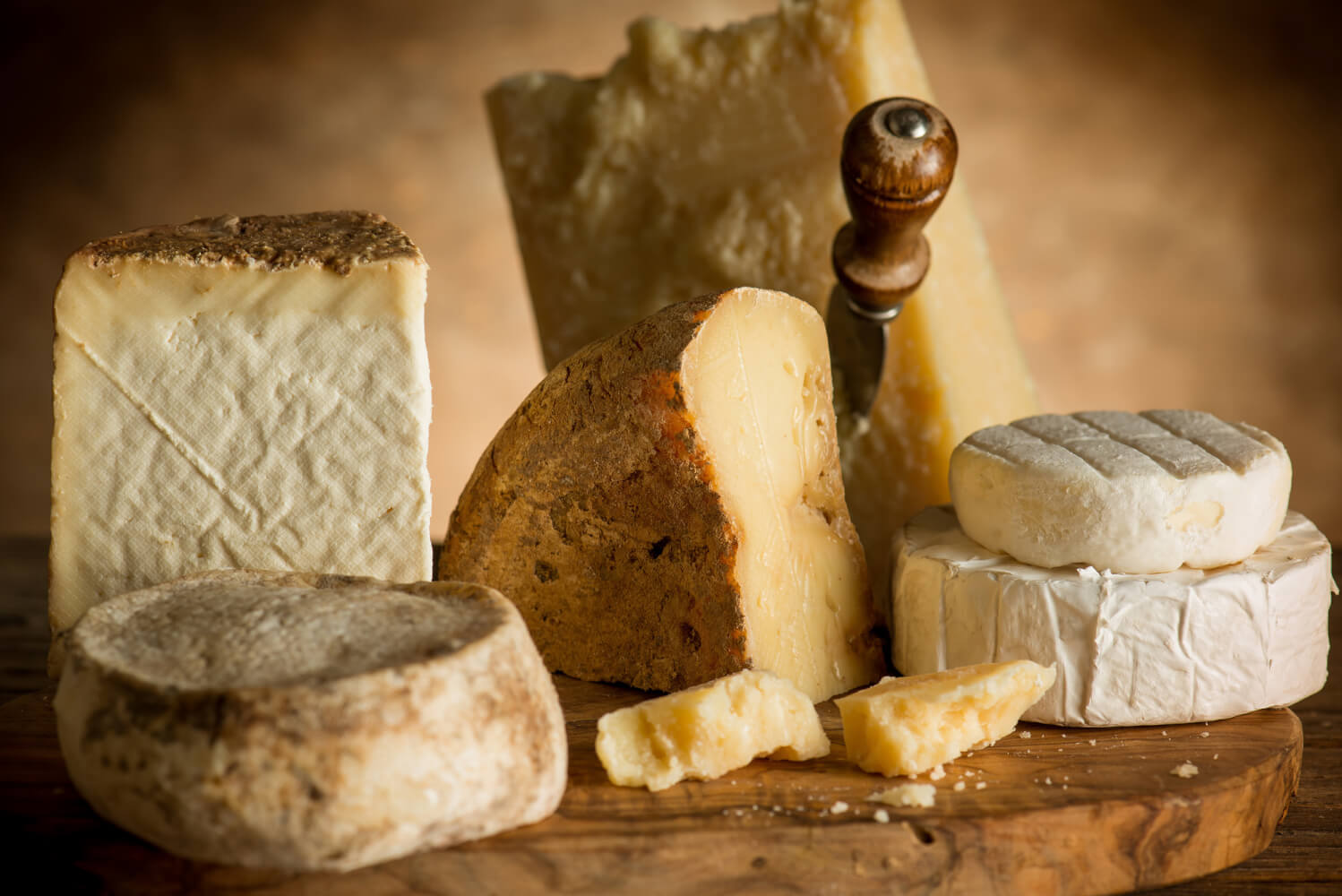
Illustrative archive image. The pictured cheeses do not identify the five protected designations discussed.