Image: AI-generated editorial illustration; a fictional scene with no real businesses.
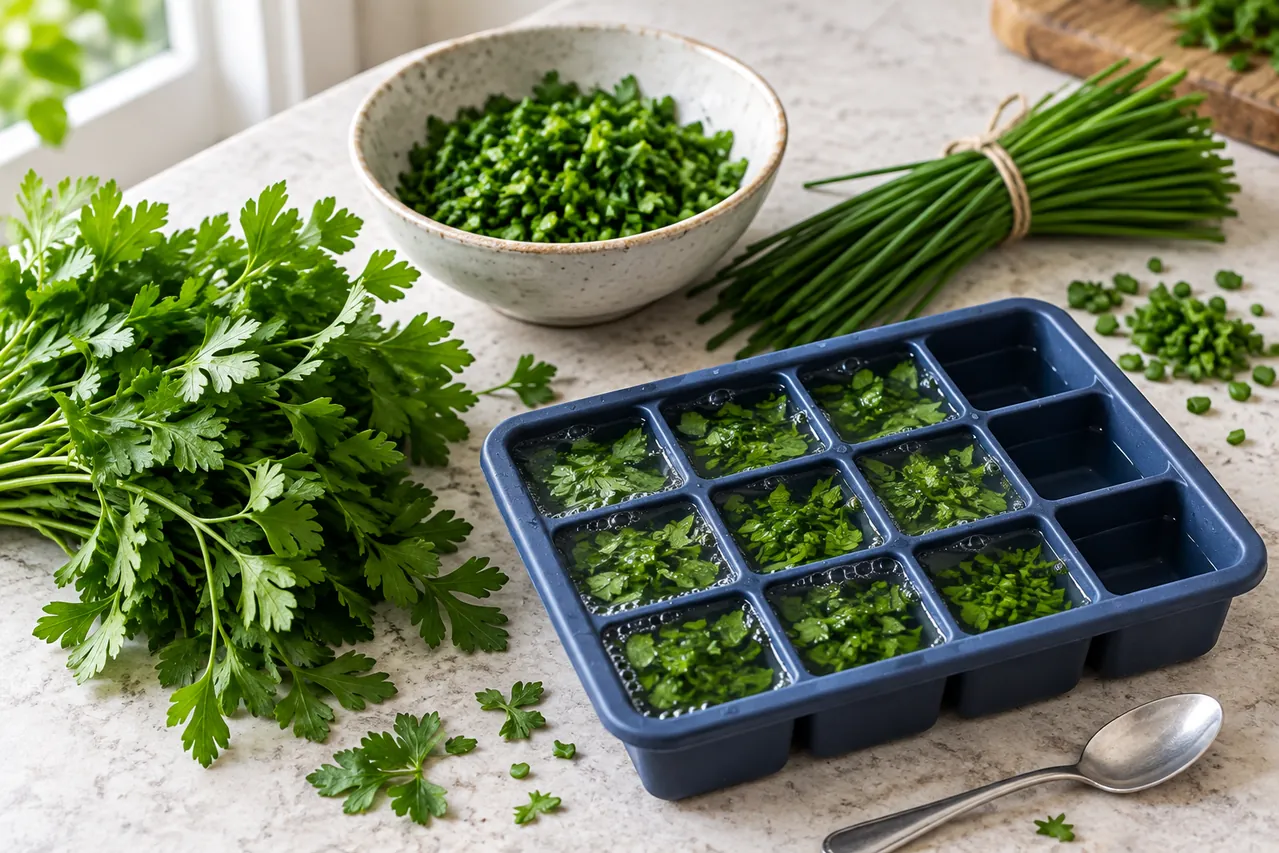
To freeze fresh herbs, start with leaves in good condition, then wash, drain and dry them carefully. Choose between loose leaves and small portions frozen with water. Match the format to the food you cook: a cube is convenient in soup, but brings extra water that may not suit another dish.
The aim is to avoid another forgotten freezer bag. If you usually cook two portions with a little parsley, prepare similarly small amounts instead of a solid block you would need to thaw all at once.
What frozen herbs will be like
The National Center for Home Food Preservation notes that herbs become limp after thawing and are usually better in cooked food than as garnishes. Do not expect the firmness of a freshly picked leaf. Use recognised culinary herbs you already know; freezing is not a way to identify a foraged plant.
Choose a format for the dish
Leaves or sprigs: the University of Minnesota includes freezing these in labelled bags. This suits small amounts without added water. Arrange portions so the entire bag does not become one awkward lump.
Water cubes: chop leaves as you would for cooking, divide between food-safe ice-tray compartments and cover with water. Freeze, then transfer the solid cubes to a labelled freezer container. Penn State’s guide explains the method and suggests putting frozen cubes straight into soups, sauces and stews.
Make the first batch a small one
- Choose one herb and prepare clean tools and a clean work surface.
- Remove damaged material, then wash, drain and dry before portioning.
- Choose an approximate amount per portion and note it down; ice-tray compartments vary in size.
- Label the herb, date and format, such as “parsley — 2 October — water”.
- Use one portion in a familiar recipe, then adjust your next batch to suit your taste.
This simple trial tells you whether you prefer less herb in each cube or a format without water. It also avoids mixing several herbs before you have decided how you want to use them.
Freezing cannot rescue spoiled food
Spain’s food-safety agency AESAN advises freezing at −18 °C or below and explains that freezing does not destroy all microorganisms. Do not freeze spoiled herbs in an attempt to make them usable. Remove only what you need and return the remaining portions promptly rather than leaving them out while you cook.
This guide uses water. If you explore oil-based methods, note Penn State’s warning that herb-and-oil mixtures must not be stored at room temperature. A freezer preparation is not a shelf-stable preserve.
How long should I keep a batch?
Quality depends on the herb, packaging and stable freezer conditions. Rather than promising one identical storage life, date your batches, use older portions first and prepare amounts you can work into regular meals. Appearance alone cannot establish safety if you do not know how a portion was stored.
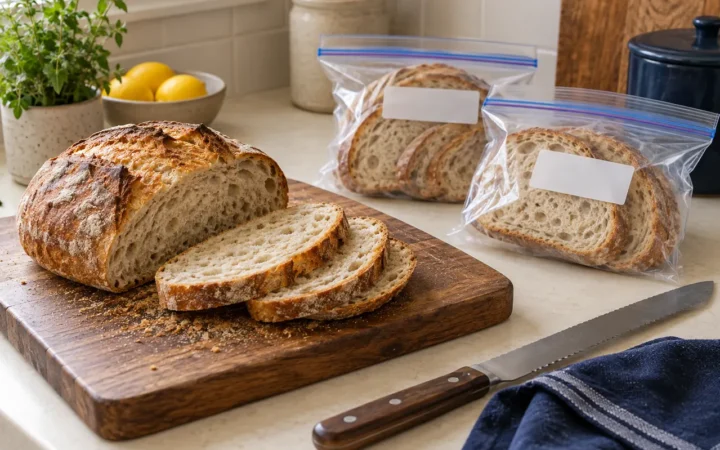
The same useful-portion approach works when freezing bread in slices or smaller pieces: organise it around the next meal, not just the space available today.
Sources checked on 2 October 2026.