Image: AI-generated editorial illustration; a fictional scene with no real businesses.
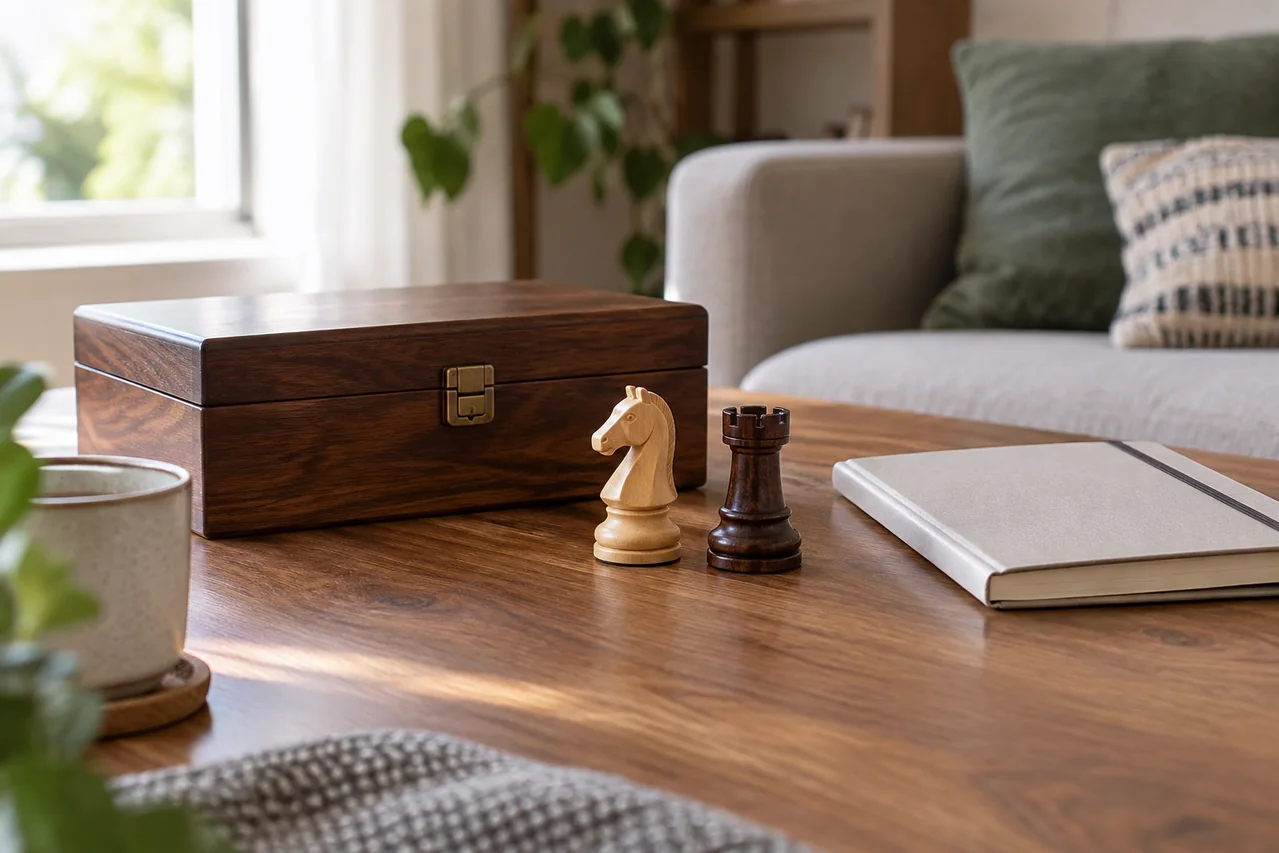
A new chess set is inviting, but the number of rules can feel daunting. A first afternoon at home does not need a famous opening or a chess clock. Give it a smaller goal: understand one decision better at the end than you did at the beginning.
Keep a reliable reference nearby
The FIDE Laws of Chess provide the rules for play over the board. Place a light square at the near right corner; White moves first. The king is not captured: checkmate ends the game. If the player to move has no legal move and their king is not in check, the result is stalemate, a draw.
Keep those distinctions in mind without trying to memorise the entire competition rulebook. Save the reference for questions, including special moves, as they arise. The session below is an informal learning suggestion, not an official tournament format.
Begin with an exercise
Choose one piece and check how it moves in a simple position. Before touching it, point to a destination square and explain why you think it can go there. Then check the answer together. After a mistake, change the position and try again to distinguish understanding from remembering an example.
As you add pieces, give the exercise one clear question: “What is attacked?” or “What would be left undefended?” You do not need several new ideas at once. If one player already knows the game, leave the beginner time to answer rather than commentating on every move.
Try a half-hour session
- First five minutes: set out the material and agree what to practise.
- Ten minutes: work together on one exercise with small positions.
- Another ten: play, pausing to look up questions.
- Final five: return to a decision that interested you.
This is a suggested structure. One position might deserve the whole session. During an agreed practice exercise, you can go back to compare ideas; distinguish that from a game you intend to play under the complete rules.
Finish with a question for next time
Note what remains unclear and what you would like to practise. “I missed that the piece was attacked” gives you a specific starting point. An isolated win or loss says little about what you understood.
Should I begin with fast online games?
You can explore different formats later. For this first session, choose one that gives you room to consult and discuss without feeling that the clock makes the decisions. Find more relaxed activities in our leisure guides.
Sources checked on 27 September 2026.