Image: AI-generated editorial illustration; a fictional scene with no real brands or businesses.
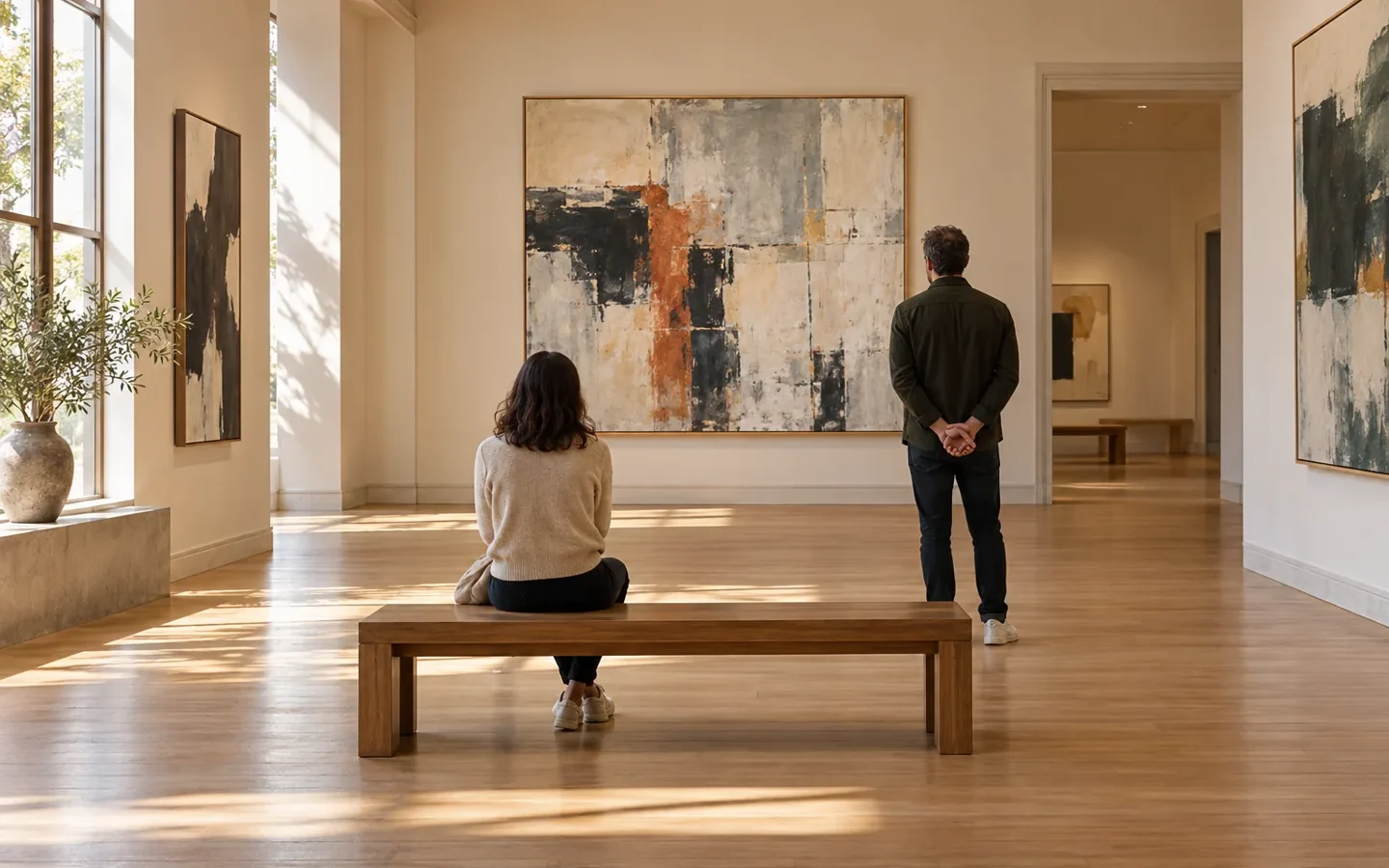
Ninety minutes can make an interesting museum visit if you do not try to fit in the entire collection. The difficult part is often letting go of a long room list. A small route leaves enough time to look closely at something that catches your attention.
Count the time inside the building
Separate travel, entry and gallery time. If you need to leave for a station at five, that is not the time you can keep looking at paintings until. Allow a margin to find the exit, collect belongings and get your bearings outside.
Before buying, check what the ticket includes and whether a particular exhibition needs a separate reservation. Look up the arrangements for your actual date. An old screenshot of opening hours cannot account for a changed holiday schedule.
Choose three stops rather than thirty
Select one work you already want to see, a nearby room to explore and an optional final stop. Find them on the official map and check whether they share a floor or building. Simplify any route that repeatedly crosses the entire museum.
Give each stop a question: which detail do I want to examine, what differs from the previous work, or what would I like the label to explain? This is a way to organise your attention, not an official itinerary or a compulsory list of masterpieces.
Read the rules before packing your bag
Requirements differ between venues. For example, the Prado Museum’s visitor rules prohibit gallery photography and filming, restrict bags larger than 40 × 40 cm and warn that cloakroom capacity is limited. They also ask visitors to observe their allocated entry slot. Check the rules for the museum you will actually visit.
Review any accessible routes or facilities you need before settling the plan. When visiting with someone else, agree on a meeting point and a stop you can skip. Avoid making the whole arrangement depend on both phones having reception and battery throughout.
A flexible example for 90 minutes
- First 10 minutes: get oriented and check with staff which rooms are open.
- Next 45 minutes: visit two main stops, including the walk between them.
- Another 20 minutes: take an optional third stop or a break, according to your pace.
- Final 15 minutes: return towards the exit and collect belongings.
This is an adaptable plan for time already inside the building. It does not predict queues, walking distances or available seats. If one work holds your attention longer, drop the optional stop.
What if a room is closed?
Ask for a nearby alternative and keep the visit small. Replacing one stop is usually easier than improvising a whole new route. Afterwards, save the name of a work you would like to understand better and look it up in the museum’s official digital collection.
For more practical planning ideas, explore our guides and advice.
Sources checked on 23 September 2026.