Your first scuba experience does not require a remote destination or a shopping list of equipment. It needs a centre that explains what you will do, who will accompany you and which conditions must be met before entering the water.
Editorial correction: we have withdrawn the earlier first-person diving story, indiscriminate beginner-destination recommendations and claims of risk-free dives. We also correct the generic reference to an oxygen tank: recreational scuba commonly uses compressed air, not pure oxygen.
A try dive is different from certification
PADI distinguishes Discover Scuba Diving, a supervised introduction, from the Open Water Diver course. Trying equipment in an introductory session does not certify you as a diver. Ask about the actual programme, initial practice in a controlled environment and what any sea dive involves.
In Spain, Royal Decree 550/2020 requires each trial-dive participant to be accompanied individually by an instructor. It also requires health screening for recreational diving, including trial dives; relevant health responses or inadequate physical condition trigger the medical-examination requirement set out in the regulation. Confirm the process with your centre.
Address medical paperwork before travelling
PADI publishes the medical questionnaire and explains when a doctor needs to assess a participant. Answer fully and honestly rather than waiting until boarding a boat to raise health or medication questions. An article or a sales conversation cannot establish your personal fitness to dive.
If you feel unwell, say so before starting and consult the appropriate professional. Having paid for a booking should not determine whether you take part.
Questions for the dive centre
- Who will instruct me, and in which language will the briefing take place?
- Where does initial practice happen, and which conditions would change or cancel the session?
- What equipment is included, and how will its fit be checked with me?
- What is the full price, which cover is provided and what is excluded?
- What is the cancellation policy if weather or a medical assessment prevents participation?
- How are emergency assistance and evacuation organised?
Let the instructor teach equipment use and signals, and make sure you can communicate a difficulty. This checklist helps you select and prepare for an activity; it does not replace training or dive instructions.
Do not choose a location from a photograph alone
A picture of a cave, deep water or a current does not establish that a site suits a beginner. Ask the centre to explain the choice in relation to the programme, your preparation and that day’s conditions. Avoid booking an experience you do not understand because an offer feels urgent.
Plan the return flight too
For symptom-free divers within its guidance, DAN recommends at least 12 hours before flying after a single no-decompression dive, and 18 hours after repetitive dives or several days of diving. Longer intervals reduce risk without eliminating it. Discuss the schedule with the centre; decompression dives require a longer interval.
If symptoms suggest decompression illness, seek medical assistance and do not fly. A minimum waiting period is not personal medical clearance to travel.
Do I need to buy all the equipment?
First ask what the programme supplies and what you should bring. Consider fit and the instructor’s advice before making impulse purchases. For travel planning, see our guide to checking a travel offer’s conditions.
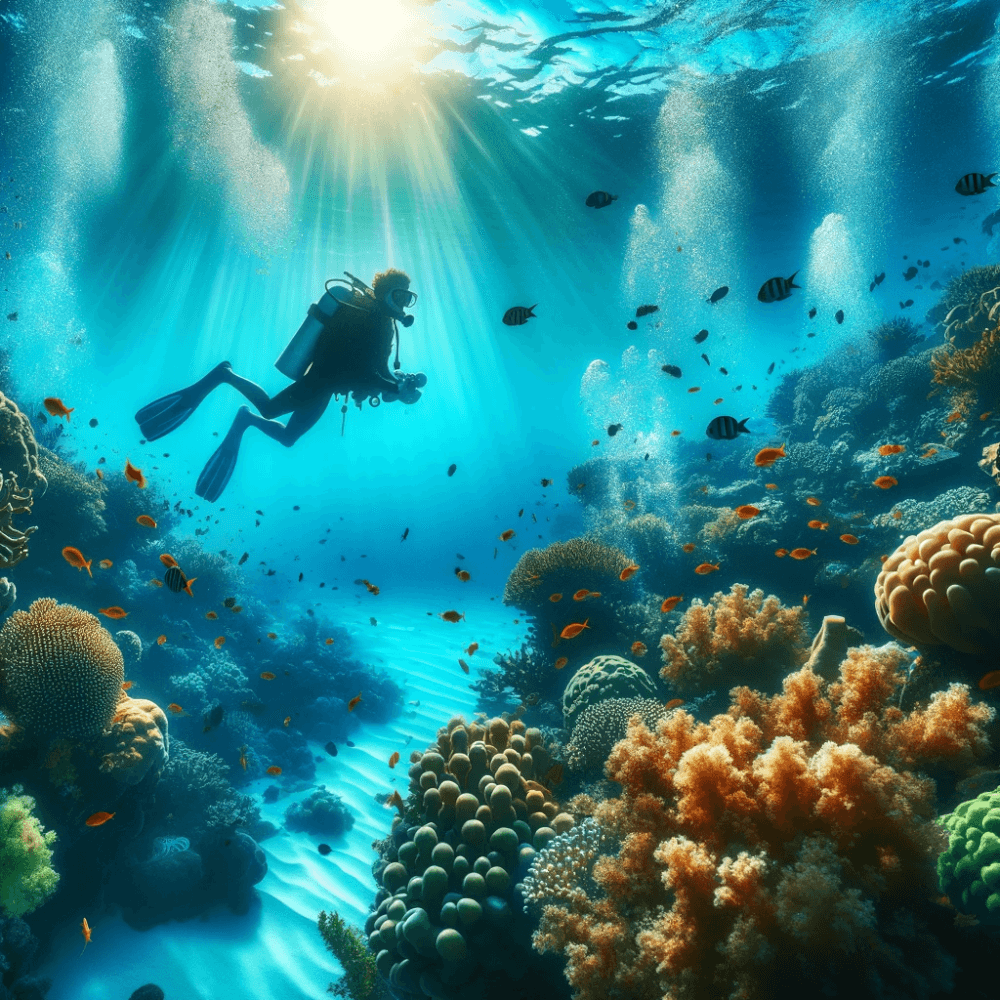
Archive digital illustration: the underwater setting is imaginary. It documents neither a real dive nor a site suitable for beginners.
Sources consulted
Sources checked: 23 September 2026.