Image: AI-generated editorial illustration; a fictional scene with no real businesses.
A useful wardrobe change makes current clothes easy to reach and keeps the rest easy to find. Before buying storage boxes, decide what you are putting away, what needs repairing and what you might still wear if the weather changes.
October can call for a light shirt at lunchtime and a jacket in the evening. Keep a small transitional section available instead of packing every summer item away at once.
Start with one shelf you can finish
Emptying the entire wardrobe onto the bed can turn a manageable task into an evening-long commitment. Choose one section, clean the surface and sort it into four groups: wearing now, next season, repair needed and no longer wanted. Decisions about selling or donating can follow; first stop those items drifting back into everyday use.
Try on anything you are unsure about. A note saying “replace button before November” leads to an action. An unlabelled bag simply postpones the same sorting exercise.
Clean, completely dry and cared for correctly
Check stains, pockets and fastenings before storing clothes. Different fabrics do not all belong in the same wash programme. Our guide to reading clothing care labels explains how to start with the garment’s own instructions.
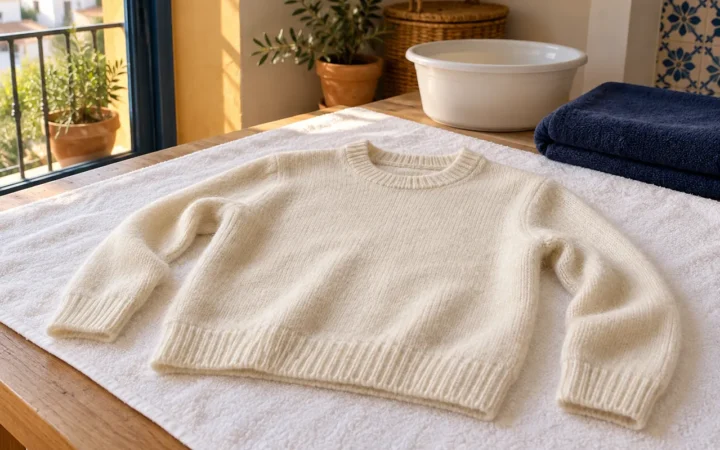
For wool, Woolmark recommends storing garments clean and distinguishes folded knitwear from woven pieces suited to appropriate hangers. Its drying guidance recommends drying knits flat, away from direct heat, unless the label allows another method. Do not close a container around damp clothing.
Choose the container after sorting its contents
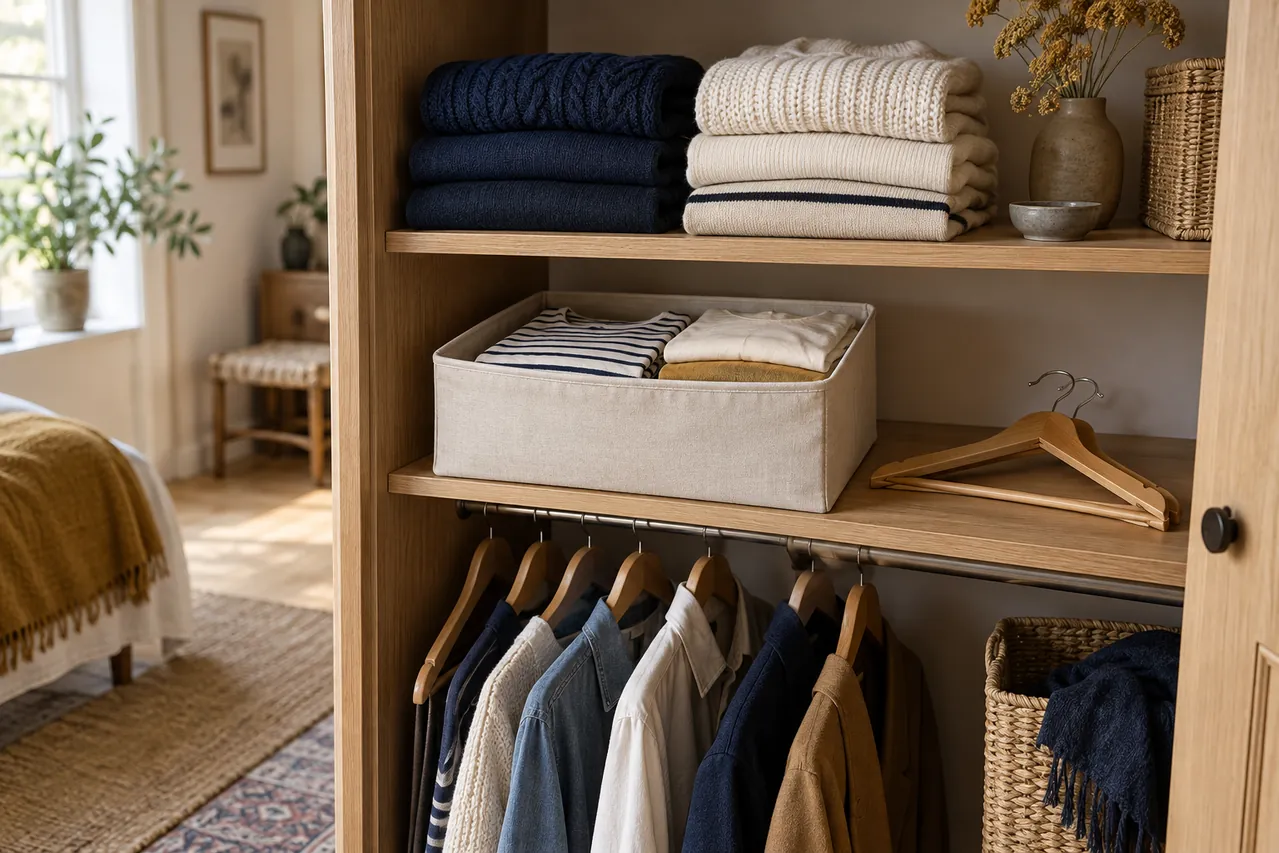
Measure the shelf and check that the box can slide out without catching the door. A large container may fit the space but make retrieving one shirt awkward. Group items by something you will recognise later: “lightweight tops” is more useful than “miscellaneous”.
Avoid tightly compressing delicate garments just to gain a little space. Woolmark’s sweater care guide warns that tight vacuum packing can distort sweaters and leave difficult creases. A container cannot make up for damp surroundings or clothes put away in poor condition.
Write a label that saves opening three boxes
Include the clothing type, owner and any outstanding task. For example: “Light shirts — Ana — one button to replace”. In a shared wardrobe, agree on the names. A system understood by only one person is easily undone.
- Keep frequently retrieved items within easy reach.
- Place a short contents list inside opaque containers.
- Store heavier items where you can handle them safely.
- Set a date to check stored clothes for dampness or damage.
What if there is no room for separate seasonal storage?
Rotate within the wardrobe you have: regular clothes at the front, occasional pieces further back. First reclaim the space occupied by undecided items. Buying an organiser before measuring and sorting can leave you with another object that is difficult to fit.
Finish by taking one garment out without dismantling a pile. That everyday test says more about the result than a photograph of perfectly aligned storage boxes.
Sources checked on 2 October 2026.