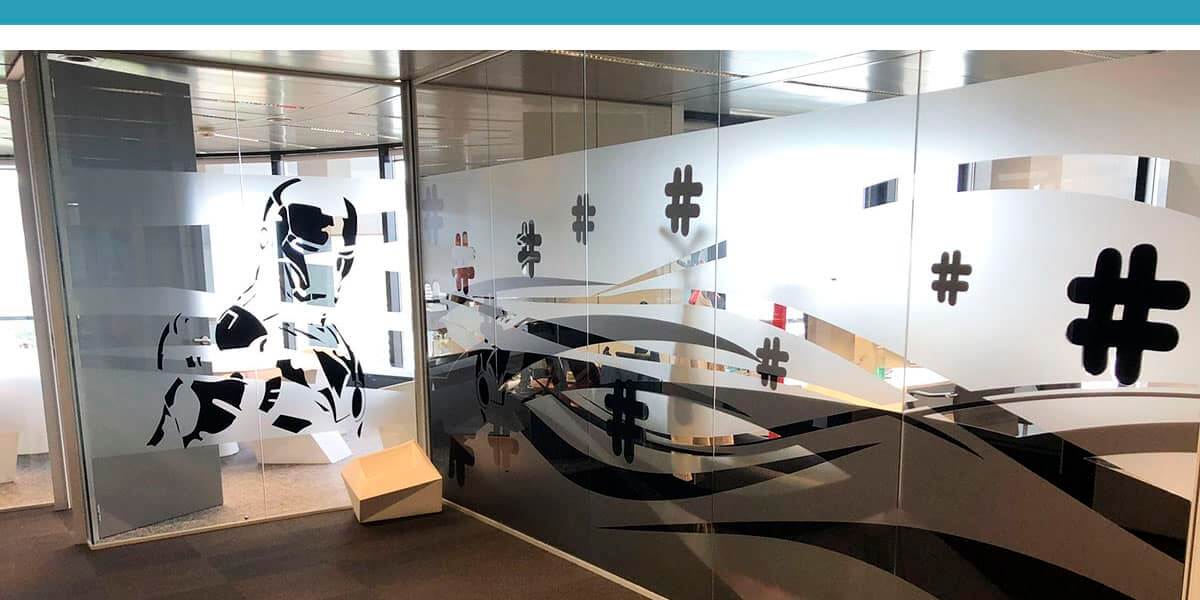
Screening a view, decorating a shop window and reducing glare are different tasks. Before choosing a window film, decide which problem you need to solve and how much light you want to retain. Products that look similar online may behave very differently on the glass.
Understand the finish
- Frosted or translucent film: blurs the view while transmitting some light. Shapes may remain visible depending on distance and lighting.
- Opaque film: blocks the view and may also block the light; it is not interchangeable with a translucent finish.
- Cut graphics: create lettering or patterns while leaving uncovered areas clear.
- Perforated graphics: combine a printed image with some visibility through the holes. Do not assume privacy under every lighting condition.
3M’s privacy film range distinguishes matte, opaque and reflective options. Check the specification for the exact product instead of transferring one film’s properties to everything sold as window vinyl.
Try it in daylight and after dark
Request a sample and examine it from both sides. Check what happens when the inside lights are on and the exterior is dark. Reflective film behaviour depends on lighting conditions, as explained in 3M’s sun-control film information; it does not create a permanent one-way screen.
Identify the glass before installation
Tell the supplier about the glazing type, orientation, interior or exterior application and existing coatings. Obtain compatibility confirmation and the manufacturer’s instructions. A decorative film does not automatically provide tested thermal or security performance.
Agree who will measure, prepare the surface, fit the film and remove previous material. Avoid blades, solvents or cleaning methods until their suitability for that glazing has been checked. Large panes, work at height and unidentified glass call for professional assessment.
Put the specification in writing
Record the exact product, dimensions, approved design, installation side, maintenance, warranty and eventual removal. For commercial premises, coordinate the window treatment with signage and the conditions that apply to the building. Explore our business and home guides for related planning advice.
Illustrative archive image. It does not identify a tested product or establish a particular supplier’s workmanship.