Image: AI-generated editorial illustration; a fictional scene with no real businesses.
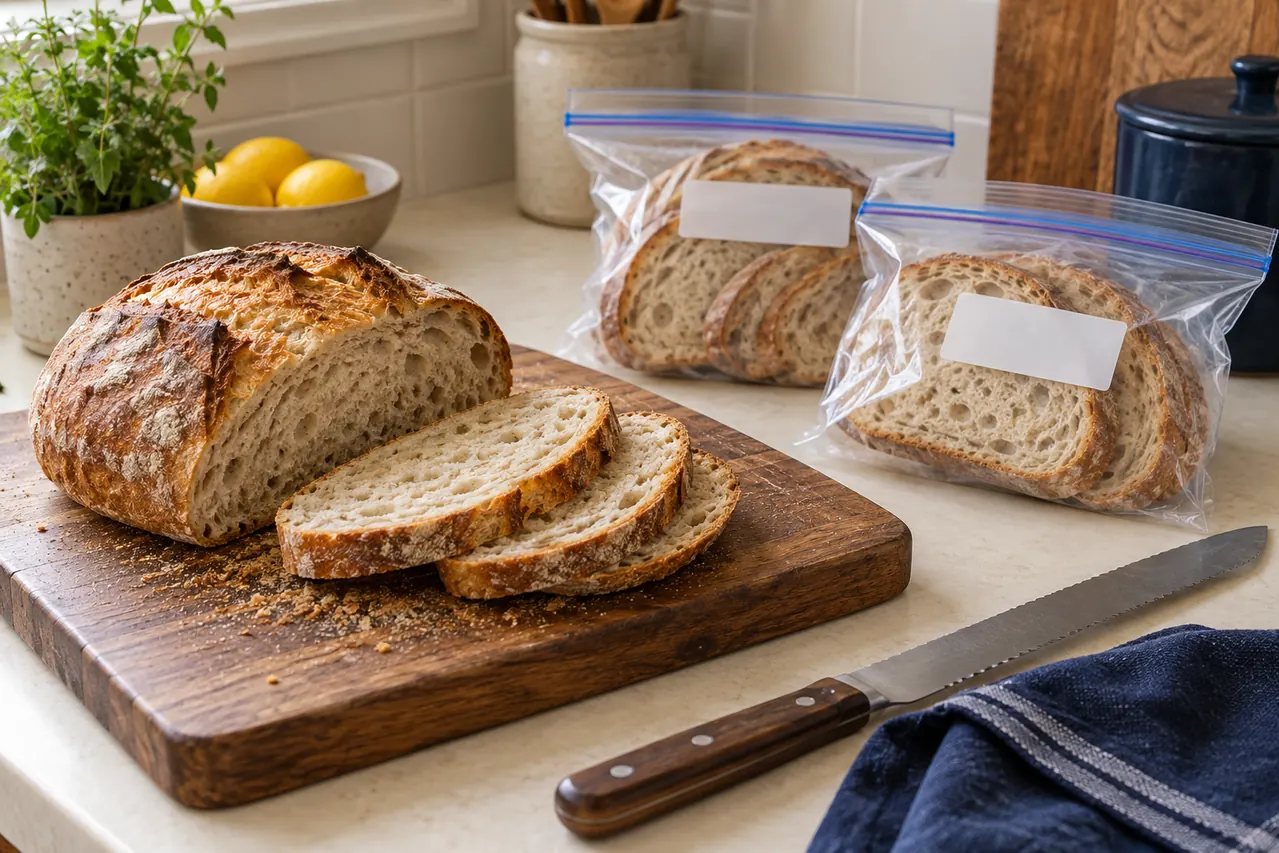
To freeze bread, let it cool completely, divide it into portions you will use together and protect it from air with freezer-suitable packaging. Keep out only what you expect to eat soon. The useful part of the system is choosing those portions before filling the freezer.
A whole loaf seems convenient until you need just two slices of toast. At the other extreme, a bag of unidentified packets is easy to forget. Aim for a small number of decisions and an arrangement you can maintain.
Divide it around familiar meals
Think in actual uses: slices for breakfast, rolls for sandwiches or bread to accompany a meal. Pack for those occasions rather than automatically dividing a loaf into equal chunks.
King Arthur Baking’s bread-freezing guide recommends cooling bread fully, protecting it from air and grouping slices according to how many you will use. Keep portions separable so you can remove one without handling the rest.
Use a short label
Record the freezing date, type of bread and packet contents: for example, “29 September, wholemeal, 2 slices”. Where different breads are kept for preferences or dietary needs, retain the original product information and keep them identifiable.
Give bread a particular place in the freezer. Put new packets behind existing ones and keep a brief note of what is available. You do not need a perfect inventory; you need to see what remains before buying more.
Freezing does not rescue spoiled bread
Spain’s food-safety agency, AESAN, explains that storage at −18 °C or below stops microorganisms growing but does not destroy them. Follow the freezer and product instructions. This routine concerns plain bread, not sandwiches or baked goods with perishable fillings.
Discard mouldy bread. The USDA’s guidance explains that porous bread can be contaminated below the visible surface. Cutting off the affected area or toasting it is not a way to salvage that bread.
Take out a portion for a specific use
For plain bread, King Arthur notes that slices can thaw before eating or go from freezer to toaster. Remove all packaging and follow the appliance instructions, checking that the slice thickness is suitable. A whole loaf needs different planning; do not assume it will thaw as quickly as a thin slice.
Choose the use before removing the packet. For a sandwich later, allow time to check the bread’s texture. For breakfast toast, take only the slices you need. The point is to avoid thawing a whole bag for a small task.
How long can I keep it?
Follow product instructions, remembering that quality changes depend on the bread, packaging and equipment. This routine does not assign an identical storage time to every loaf. Adjust your next purchase if unused packets keep accumulating. To organise the rest of breakfast, see our repeatable French-press coffee routine.
Sources checked on 29 September 2026.