Image: AI-generated editorial illustration. Fictional scene; not a photograph of a real location, business, tested product or app interface.
To clean muddy suede shoes, let them dry first and gently remove loose dirt before reaching for a cleaning product. Do not put them in the washing machine or treat them like smooth leather. After a wet walk, checking the material and arranging proper drying makes more sense than immediately scrubbing at the mark.
You get home with darker toes and mud beside the soles. Is that dark patch dirt or just moisture? Treat those as different questions. This guide organises basic home care using footwear manufacturers’ instructions. It does not promise to remove every stain or replace the guidance for your particular pair.
Check that the material really is suede
Look at the box, purchase details or manufacturer’s product description. Clarks describes suede as leather with raised surface fibres that create its velvety feel. A suede-effect fabric may need different products. Instructions for one boot also need not suit a shoe with a membrane, decorative details or several different materials.
Timberland’s care guide separates products by material. Before buying a cleaner, look for suitability for suede and check any restrictions on colour, finish or use. A label simply saying leather cleaner is too broad to settle the question.
If they are wet, resist the urge to scrub
Nike advises letting moisture and mud dry before brushing. Give the shoes time and examine them again once dry. A damp patch does not yet tell you what the final surface will look like.
Where the shoe’s instructions allow, clean unprinted paper can help support the shape. Timberland warns that newspaper ink can transfer. Choose a ventilated space and leave room between the shoes. There is no fixed drying time that suits every pair; check that the material is actually dry.
Start with the dirt you can remove dry
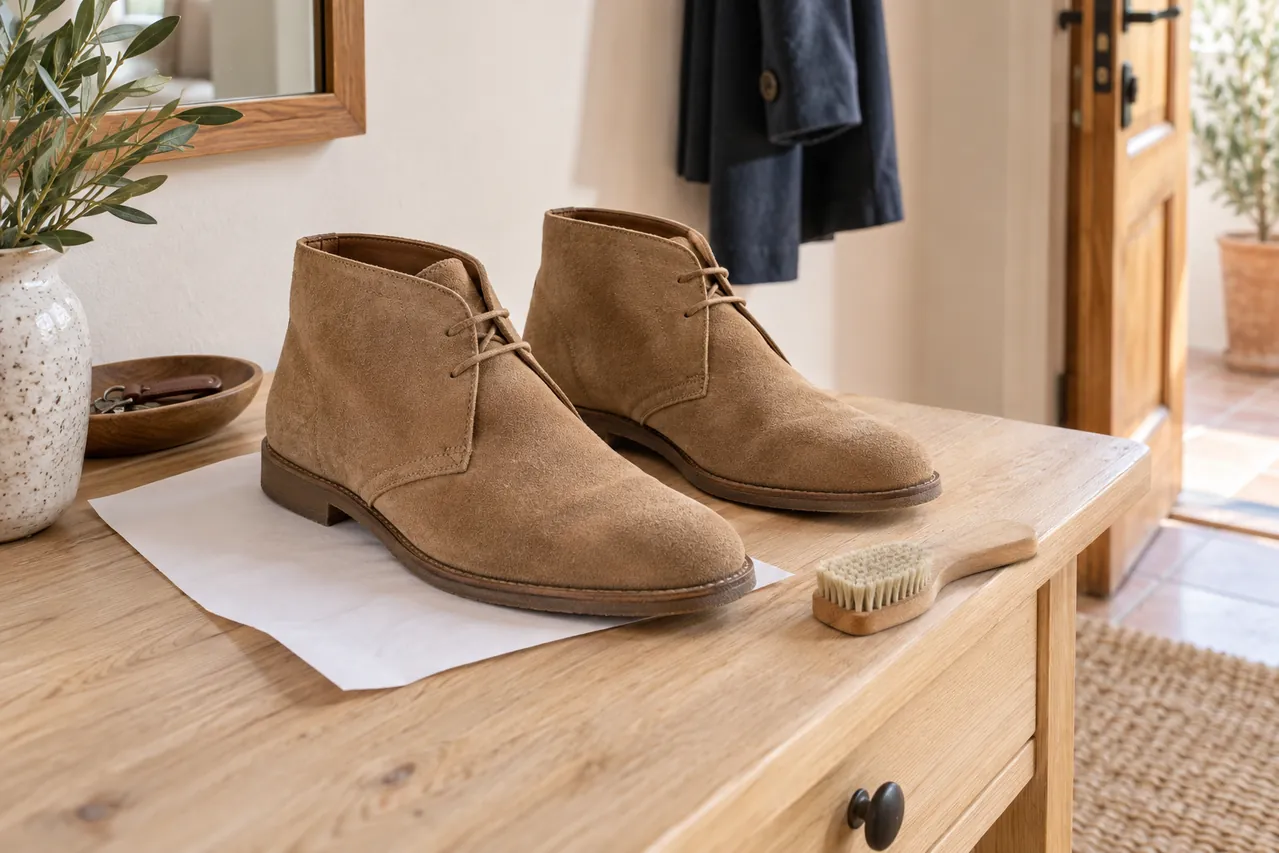
- Set up your work surface. Use paper or a tray to collect debris and see how much you are removing.
- Choose a suitable brush. ECCO starts with light brushing. Follow the footwear maker’s advice on which brush surface and direction to use, rather than scrubbing forcefully.
- Look before moving on. Compare both shoes under similar light. What remains may be flattened fibres rather than a stain that needs liquid treatment.
- Deal separately with a surface mark. Nike describes using a suede eraser. Try gentle pressure on a discreet area first and carefully brush away the residue.
Do not keep attacking the same spot because the first pass did not transform it. The useful habit is to see what each step does before adding another. If the colour changes or the finish looks disturbed, stop and check the product and footwear instructions.
When a dedicated cleaner makes sense
For remaining dirt, select a compatible product and test it on an inconspicuous area. Follow its quantity and application method. Foams, liquids and conditioners do not necessarily work in the same way; avoid combining one brand’s waiting time with another brand’s dose.
For example, UGG’s instructions for its Cleaner & Conditioner describe application with a damp sponge and natural drying away from heat and sunlight. Those are instructions for that product and compatible footwear. They are not a reason to wet every suede shoe.
For a large stain, persistent oily mark or a particularly valuable pair, ask a professional who works with suede. Explain what was spilled, when it happened and what you have already applied. That gives them something concrete to assess, rather than asking for a promise that the shoes will look brand new.
Protective spray does not make every shoe waterproof
If the manufacturer permits a protector, apply it to clean, dry footwear according to the product instructions, including ventilation and spraying distance. Allow the required drying before wearing them. UGG distinguishes water-resistant styles from waterproof ones. Do not assume a spray turns your particular shoes into waterproof footwear.
When choosing your next pair, think about the actual job: walking in rain, a short commute or mostly dry days. Checking the model description is more useful than relying on a photograph of boots in a rainy landscape.
Questions before you put the brush away
Can I machine wash them?
Clarks advises against machine washing suede shoes. Follow your model’s instructions; removing the laces does not make the shoe machine washable.
Can I use my usual shoe polish?
Check compatibility first. A finish intended for smooth leather should not automatically be treated as suitable for suede. Keep the products clearly identified so they do not get mixed up during the next clean.
Where should I store them?
Once dry, keep them away from direct sunlight and heat sources, as Clarks advises. If you are organising seasonal clothes, use our wardrobe-storage guide to plan the space, without putting damp shoes away just to clear the floor.
Manufacturer sources
- Nike: cleaning suede
- Clarks: care and storage
- Timberland: materials, mud and drying
- ECCO: cleaning steps
- UGG: care and product instructions
Sources checked on 12 October 2026. Check the official sources for details that depend on your date, garment, footwear or app version.