First Communion is a person’s first reception of the Eucharist. For a family preparing for the occasion, it helps to separate its religious meaning, the rules of their church and the customs of the celebration. Clothing, a meal and presents do not, by themselves, explain the sacrament’s origins.
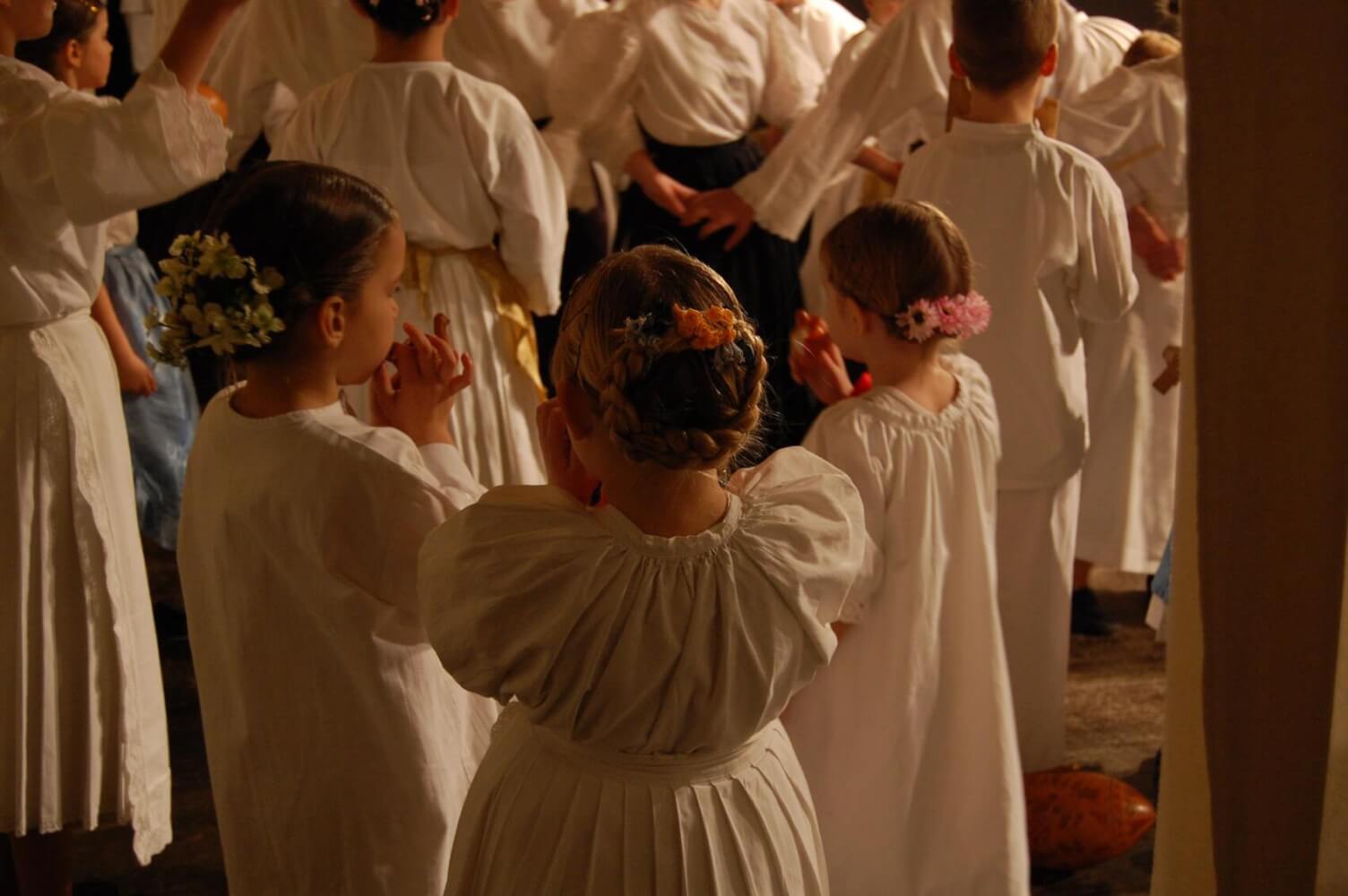
Archive photograph of a group in ceremonial clothing. It does not identify a particular parish, country or date.
Its meaning in Catholic tradition
The Catholic Church understands the Eucharist as the sacrament of Christ’s body and blood. First Communion is not an additional sacrament: it is the first occasion on which a person receives Eucharistic communion. The Code of Canon Law describes the practice and its conditions.
The history of the Eucharist should not be confused with the development of a children’s celebration as a family might organise it today. An earlier version of this article called 1215 the first recorded Communion and gave a universal age range of twelve to fourteen. Those statements have been removed because the sources consulted do not substantiate them.
Why 1910 matters
The decree Quam singulari, dated 8 August 1910, is a documented milestone. The Vatican’s centenary explanation says that Pius X placed first confession and Communion at the age of reason, around seven, in contrast to practices that postponed them. This does not mean every parish today holds the ceremony at exactly the same age.
Preparation and different traditions
For the Latin Church, canons 913 and 914 require preparation and understanding suited to the child’s capacity, and provide for confession beforehand. Families should discuss the appropriate preparation and timing with their parish.
The distinction is not simply between Catholics and Orthodox Christians. Paragraphs 1233 and 1244 of the Catechism also describe Eastern Churches giving the Eucharist to young children following baptism and confirmation. An explanation of Latin Church practice therefore does not cover every Catholic tradition.
Planning the family gathering
- Confirm the ceremony first: ask the parish about the date, preparation, documents and photography rules.
- Set a budget: separate food, travel, clothing and optional entertainment.
- Consider guests’ needs: ask about allergies, step-free access and a quiet place to rest.
- Leave some free time: a short meal and optional games may suit the family better than a full day of performances.
There is no single month, outfit or banquet format every family must follow. If you book entertainment, ask for written details of suitable ages, duration, space requirements and date-change conditions.
Is a large party necessary?
An expensive social celebration is not a requirement of the canons cited here. A family can choose a simple gathering within its means. Before giving an activity as a present, check the voucher conditions and avoid committing the recipient to a date they have not chosen.
Sources and review
Reviewed on 23 September 2026.