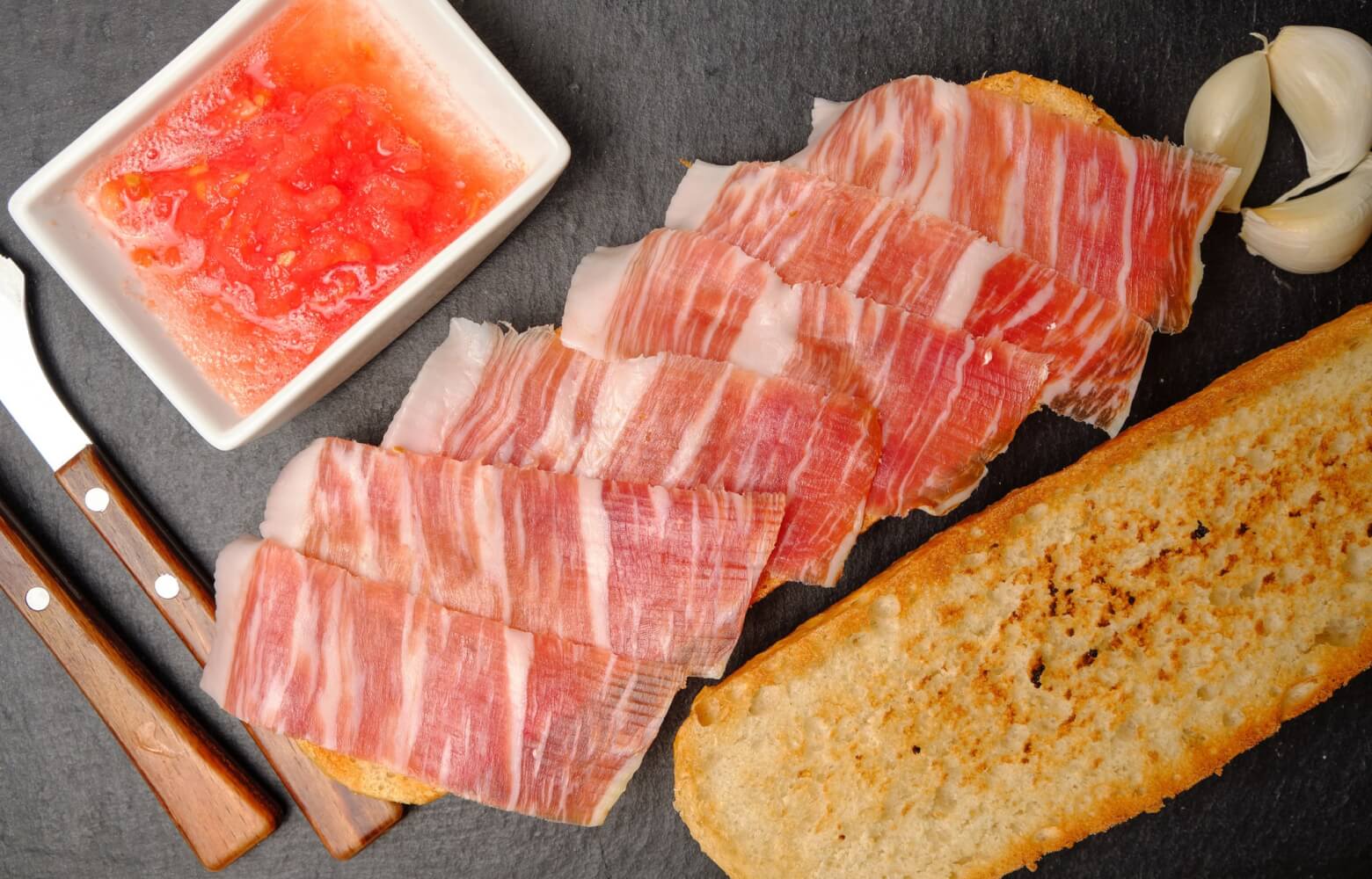
Two hams can both be described as ibérico while belonging to different categories. Separate three questions when comparing them: what does the seal identify, what breed percentage does the label state, and is a protected origin certified? A photograph of the slices or a phrase such as special selection cannot answer those questions on its own.
The four seal colours
Spain’s standard assigns these seals to ibérico hams and shoulders:
- Black: bellota 100% ibérico.
- Red: bellota ibérico.
- Green: cebo de campo ibérico.
- White: cebo ibérico.
Also check the breed percentage: 100%, 75% or 50%, as applicable. For sliced products, read the package description; a photograph of a whole leg does not replace that information.
Ibérico does not automatically mean acorn-fed
The bellota category involves acorns and other dehesa resources during the finishing period. Cebo de campo and cebo include compound feed and different rearing systems. Not all ibérico ham belongs to the bellota category.
For an initial comparison, write down each product’s complete designation. Then decide whether you want to compare prices within one category or try different categories. Mixing them without noticing can make two offers seem equivalent when they are not.
What protected origin adds
A Protected Designation of Origin, or DOP in Spanish, links a product to a geographical area and specific requirements. Ibérico ham designations listed by Spain’s agriculture ministry include Guijuelo, Jabugo, Dehesa de Extremadura and Los Pedroches. This is separate from the seal colour: green does not mean protected origin.
If you want a particular DOP, check that it appears in the product’s identification. Do not infer it from a woodland photograph, a seller’s business address or a regional name in advertising. Nor should a region be treated as a promise that every ham produced there tastes identical.
A manageable way to compare labels
- Write down the category and breed percentage of the products you are considering.
- Record the DOP separately if it is stated and can be verified.
- Compare equivalent formats, such as sliced packets with sliced packets, or whole pieces with their presentation taken into account.
- Check weight, quantity, instructions and total cost.
- If anything is unclear, ask for a legible photograph of the label for the exact product you would receive.
The classification helps you understand the purchase; your taste preferences develop by trying it. For a first order, buying a small amount and noting its product name may be more useful than committing immediately to a large piece.
Does longer curing always mean better ham?
A single number is not enough to make the choice. Read the product-specific details alongside its category, format and intended use. Do not assume that every ibérico ham has the same curing period.
Our ham buying guide provides examples of official catalogues and questions to ask before ordering.
Archive food photograph: the appearance of the slices cannot certify their breed, category or origin.
Sources and checks
Information checked on 23 September 2026. Check the linked sources for current menus, products and conditions.