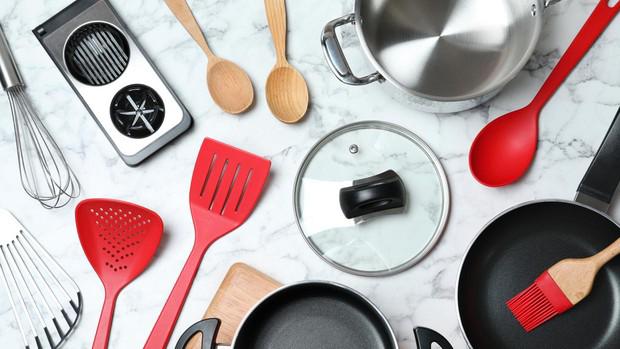
Before buying a large utensil set, think of three meals you cook regularly. What do you use to chop, stir, drain and serve them? That list is a more useful starting point than a drawer full of gadgets. An everyday kitchen kit should fit your cooking habits and the space available.
A starter kit you can adapt
A manageable knife and cutting boards
Choose a knife that feels comfortable for everyday tasks and a stable board that fits your worktop. For hygiene, the FDA recommends separate boards for fresh produce and raw meat, poultry or seafood, and washing surfaces and utensils with hot soapy water after each food preparation.
A pot and frying pan in useful sizes
Choose for the portions you normally cook, rather than the largest set on display. Check hob compatibility, weight and handle comfort. For coated pans, follow the manufacturer’s guidance on heat, utensils and cleaning; different products can require different care.
A turner, spoon and tongs
These cover different jobs: lifting food, stirring a sauce and gripping a piece. You do not need several versions of each. Check suitability for food contact and the intended temperature. A flexible baking spatula should not automatically be treated as suitable for a hot frying pan.
A colander and mixing bowl
Pick a colander that suits your sink and has a comfortable grip. A bowl gives you room to mix without spilling. Consider whether the pieces nest together before buying: storage is part of a practical choice.
A whisk, peeler and recipe-specific extras
A whisk may be useful for batters or sauces, and a peeler if you regularly need one. Kitchen scissors, a grater and a pestle and mortar suit particular jobs. Add them when you have a use in mind, rather than treating every accessory as compulsory.
Baking needs suitable dishes and paper
Check that a dish is labelled for oven use and follow its stated limits. If it needs lining, use baking parchment intended for that purpose and follow the pack instructions. Ordinary kitchen paper or paper towels should not be used as a substitute.
Reynolds’ instructions for its baking parchment illustrate why the label matters: they specify a temperature limit and exclude uses such as broiling. This is an example of product-specific guidance, not a brand recommendation or a rule for every type of paper.
Consider a food thermometer
The FDA warns that colour and texture are unreliable indicators of safe cooking. A food thermometer measures the internal temperature; consult the guidance for the food you are preparing and learn how to use and clean your particular device.
What should you buy first on a small budget?
List what you already own, choose a few recipes and identify the tools you actually lack. Prioritise pieces you can handle, clean and store easily. Specialist equipment can wait until a recipe gives you a reason to buy it. Browse our practical guides for more everyday ideas.
Archive photograph of kitchen utensils; it does not represent product testing or a recommended set of brands.